
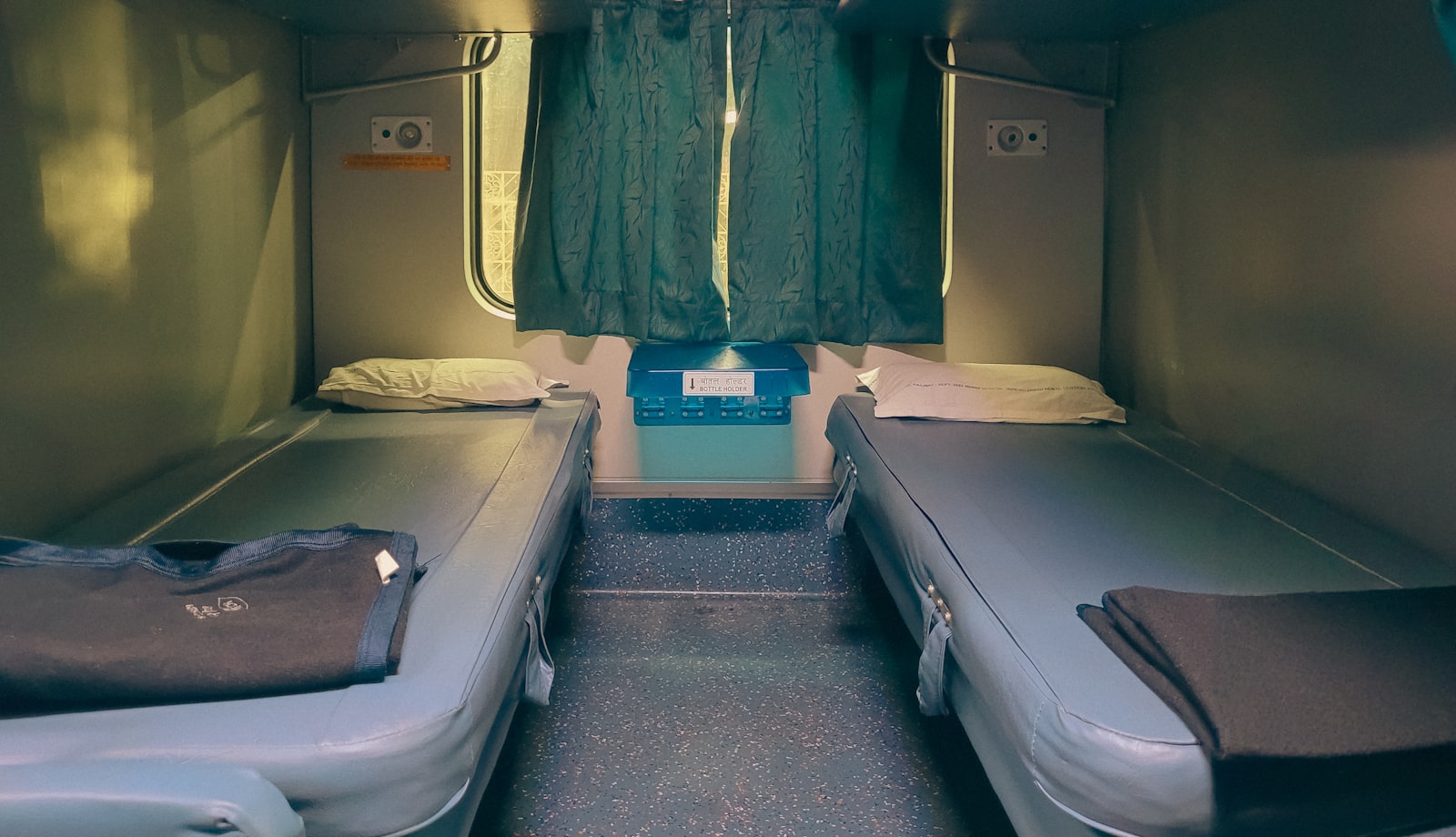
Berth vs Seat Inventory: Why Sleeper Rail Breaks Generic Booking Systems
If you run an overnight or sleeper service, you already know your inventory isn't a seat count. You sell berths inside compartments, compartments inside categories, and the same physical space behaves differently depending on who's buying it — a family taking a whole compartment, or four strangers each taking one bed in it. This article is for operators who run that kind of service: regular overnight routes, themed multi-night journeys, or a mix; who sell more than one accommodation class on the same train; and who take both solo bookings and group bookings against the same carriages.
The argument is narrow on purpose. It's about the inventory model — berths, compartments, categories — and why a platform that treats a place on the train as one number can't represent what an overnight service actually sells. Day-seat-to-night-berth reconfiguration and multi-leg through-ticketing are real problems too, but they're separate ones; this is about the unit of sale.
Why the inventory model is the thing that breaks first
Most booking platforms model capacity as a single available count per departure. That's the right shape for a day train, a tour, or a coach with a fixed seat plan. It holds up for an overnight service right until the second category sells out — and then the gaps show.
The cost isn't theoretical. When the system can only hold one number, the operator ends up running the real inventory somewhere else: a spreadsheet that maps which compartment is single-sex, a whiteboard in the reservations office tracking which berths are still poolable, a phone call to confirm whether the accessible compartment is still being held. Every one of those workarounds is a place where a double-booking starts. And the failure lands at the worst moment — peak season, a full train, a guest who booked a twin compartment online discovering at the platform that it was sold an hour earlier through an agent because the two channels were counting against different numbers.
The deeper cost is what it does to revenue. An operator who can't model categories distinctly can't price them distinctly, can't hold one back for direct sales, and can't release an unsold accessible compartment to the general pool at a sensible cutoff. The inventory model isn't a back-office detail. It's the thing that decides whether the train fills profitably or fills by luck.
The berth-versus-seat problem, and where it bites
A seat is fungible. One passenger, one place, and any passenger fits any seat in the class they bought. A berth isn't. A berth sits inside a compartment, the compartment belongs to a category, and the category has rules about who can occupy the berths around it. The unit you're actually selling is smaller and scarcer than a seat, and it carries constraints a seat never does. A platform built on the seat assumption can hold the right total number and still get every meaningful question wrong. Here are the places it bites — each one a scenario overnight operators recognise on sight.
Whole-compartment versus per-berth bookings against the same space. A family of four books an entire four-berth compartment as one booking. The next day, four solo travellers each book a single berth in an identical compartment — four separate bookings, four separate names, one physical compartment. Both are legitimate ways to sell the same space, and the platform has to hold both models at once: decrement four berths from one transaction in the first case, and stitch four independent transactions onto one compartment in the second, without ever letting a fifth booking land. Industry guidance on European sleepers is blunt about how the second model works — "berths are sold individually, one ticket = 1 person = 1 bed", and the unsold beds in your compartment go to other passengers (Seat 61, Sleepers & couchettes explained). A system that only understands "compartment = one bookable unit" can't sell the single berth; a system that only understands "berth = one bookable unit" can't cleanly sell the whole compartment to the family. You need both, against the same carriage, at the same time.
Single-sex allocation rules on shared compartments. Once you sell berths individually, you inherit the rule that makes shared sleeping work: a shared compartment is single-sex unless everyone in it is travelling together. A woman booking one berth in a three-berth compartment shares with two other women, or the compartment doesn't fill that way at all (Seat 61). For the booking engine, that means a berth isn't simply "available" — it's available conditionally, depending on who's already in the compartment and who's trying to join. A flat seat count has no way to express "this berth is open, but only to a female traveller, until the compartment either fills single-sex or gets booked whole". Get this wrong and you either oversell into an allocation that can't legally fill, or you strand sellable berths because the system can't reason about the condition.
Multiple categories drawing on a limited physical count. A single rake might offer single sleepers, twin sleepers, family compartments, and accessible compartments — each a distinct category, each priced differently, each backed by a hard physical count that can't borrow from the others. When the twin category sells out, the system mustn't quietly offer a single or a family compartment as a substitute, and it mustn't let the family count drift because two of those compartments got reconfigured for the season. Each category allocates independently, against its own real number, and the booking flow has to show the guest only what genuinely exists in the class they want. A platform that collapses all of this into "X places left on the train" sells the train but not the categories — and the categories are where the margin lives.
The accessible-berth constraint that has to hold, then release. Accessible compartments are a small, fixed count, and most operators hold them back so a wheelchair-using guest booking three weeks out isn't told the train is full of stairs. But held capacity that never releases is unsold capacity. The model has to do two things a flat count can't: ring-fence the accessible category against general demand, and then release whatever's unbooked back to the pool at a sensible window before departure, so the compartment earns revenue rather than running empty out of caution. That hold-then-release behaviour is an allocation rule, not a static number — the same family of channel and segment allocation rules that lets an operator reserve capacity for a group and release it on a timer.
Set boarding and alighting points on an overnight stay. Sleeper rail is a hybrid: it's accommodation that moves. The compartment is held across the whole overnight the way a cabin is held across a multi-night stay — one space, occupied continuously, not released and re-let between stations (durational and multi-sector services). But unlike a hotel, the stay has a fixed boarding station and a fixed alighting station, and the guest who joins at an intermediate stop is still on the manifest from the moment they confirm, with their compartment held empty until they arrive. A booking model borrowed from nightly-stay accommodation tends to miss the boarding constraint entirely; a model borrowed from point-to-point transport tends to miss that the unit is occupied overnight, by name, and can't be resold mid-journey. The overnight berth needs both halves modelled together, or one of them quietly fails.
What to ask a platform before you trust it with the inventory
Demos run on the happy path — one guest, one available compartment, one clean sale. The model shows its real shape when you push it on the cases above. A few questions separate a platform that genuinely models berths from one that's a seat count with compartment labels painted on.
Ask the vendor to model your actual rake on screen: categories, the compartments inside each, the berths inside each compartment, and the physical count behind every category. Watch whether the counts are independent or whether they all trace back to one number. Then ask them to sell a single berth in a shared compartment to a solo traveller, and immediately sell the next berth in the same compartment to a different person — and show you what the gender rule does to the third berth. Ask them to sell the whole compartment to a family as one booking, against the same carriage they just sold berths in. Ask how an accessible compartment is held and when it releases. Ask whether a guest joining at an intermediate station shows on the manifest with their compartment held empty until they board.
Strong answers are specific and shown live. The vendor draws your rake, sells the berths, triggers the allocation rule in front of you, and exports a manifest that reflects it. Weak answers are the warning signs: "we model the train as total capacity", "the gender rule is something your team manages manually", "accessible berths are just another inventory bucket you'd track on the side", or "that's on the roadmap". If the inventory model can't answer these without a workaround, the workaround becomes your operation. And while you're testing the model, test what happens around it — how the platform handles a cancellation or a service disruption on a held berth, and how it keeps agents and direct channels counting against the same physical compartment rather than two drifting numbers.
Where JetSetGo fits
JetSetGo models the rake the way it actually sells: compartment categories — single, twin, family, accessible — each containing its individual compartments, each compartment carrying its berth count, single-supplement rate, accessibility attributes, and adjoining relationships, and each category allocating independently against its own physical count. Multi-berth compartments can be sold whole-compartment to one party or shared as separate per-berth bookings, with the operator deciding which model fits each service. The overnight compartment is held continuously across the journey rather than re-let between stations, and allocation rules can hold a category back — accessible or premium — and release the unbooked balance to the general pool at a configurable window before departure. These are the behaviours described in the sleeper rail pillar and the durational and multi-sector services and channel management capability docs.
Where to go next
If overnight services are your operation, the sleeper rail booking software pillar is the full segment overview. The mechanics behind the inventory model live in the durational and multi-sector services capability doc, which covers how one reservation holds a compartment across an overnight. The channel management doc explains the hold-and-release allocation rules that make the accessible-berth case work, and the cancellation policies doc covers what happens to a held berth when a guest cancels or a service is disrupted. When you're ready to evaluate platforms against your own rake, the how to choose a sleeper rail booking system guide turns this into a checklist.
When you want to see the inventory model run against your actual carriages, book a demo.